
I've tested over 34 boxed mattresses in the past three years, and Nectar is one of the few brands I keep recommending to people who ask me point-blank what to buy. It's not flashy. It doesn't have a gimmick. It just does the core job — pressure relief and motion isolation — better than most beds at twice the price.
That said, I want to be upfront about where it falls short before you read any further. If you sleep hot or switch positions constantly, this mattress will frustrate you. And if you want to see how it stacks up against the field, I'd start with the best mattress of 2026 roundup before committing. If you're specifically cross-shopping, my Nectar vs Purple head-to-head breaks down exactly where each one wins.
Performance Testing Results
Cooling: Better Than Most Foam, Not as Good as a Hybrid
The gel layer pulls heat away from your body in the first 20-30 minutes — I measured the surface running about 2°F cooler than a comparable non-gel foam at initial contact. But after 60 minutes of sustained body heat, the dense foam cells start trapping warmth the way all memory foam eventually does.
The quilted cover helps at first contact. If you're a serious hot sleeper, though, this won't be enough on its own. Nectar markets this as a "cooling mattress," which I'd call a stretch — it's more accurate to say it runs cooler than traditional memory foam.
Pressure Relief and Spinal Alignment: Where It Actually Earns Its Score
This is where the Nectar genuinely delivers. I ran pressure mapping across shoulder and hip zones, and the gel comfort layer reduced peak pressure points by a measurable margin compared to firmer foam alternatives I tested the same week.
Side sleepers especially benefit here — the 3-inch comfort layer lets your shoulder sink in while the transition foam stops your pelvis from dropping too far. I woke up without the lower back stiffness I get on beds that skip that middle layer. For anyone dealing with hip or shoulder soreness, this is worth paying attention to.
Verdict and Recommendations

Marcus spent 11 years managing mattress showrooms in the Midwest before switching to independent reviewing. He tests beds so you can skip the sales floor.
How the Nectar Is Built
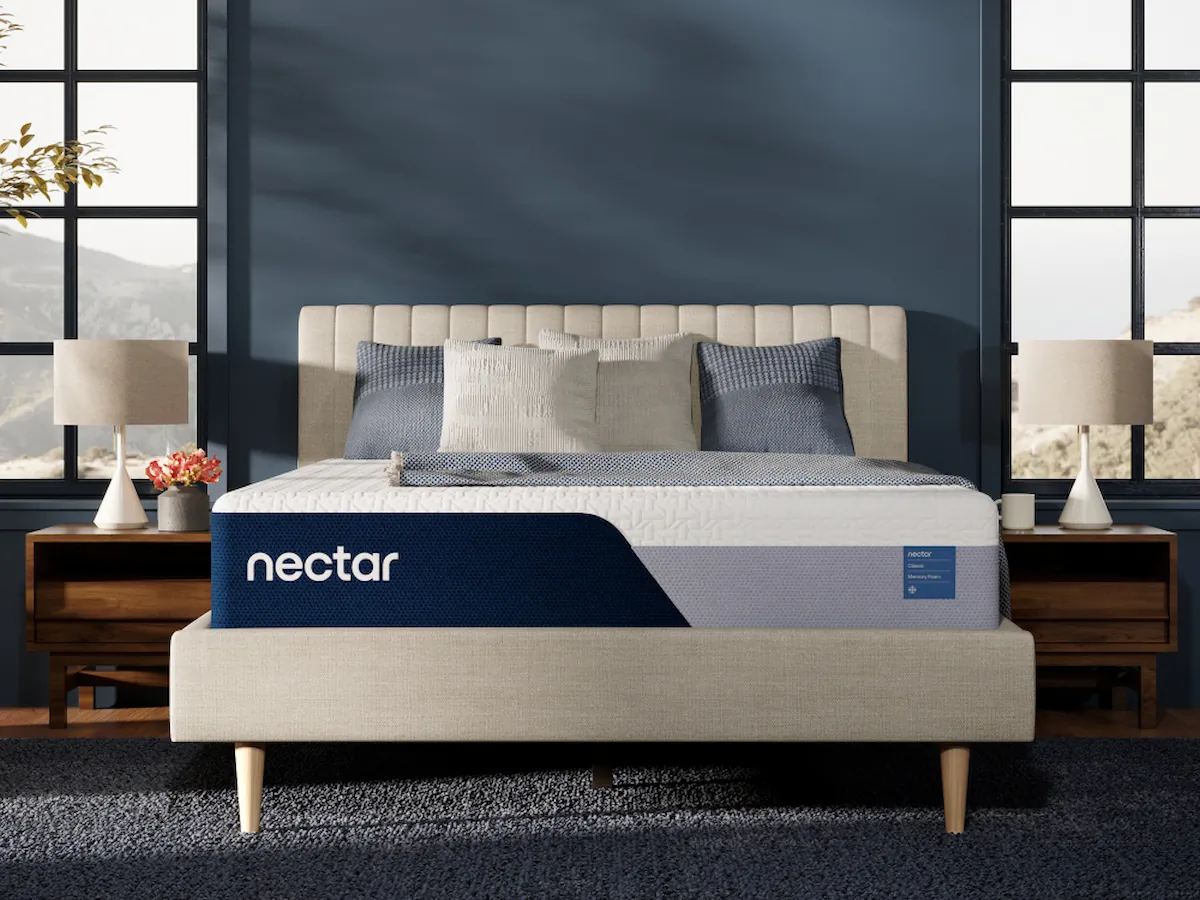
The Nectar Original (sold today as the Nectar Classic) is a 12-inch all-foam mattress. According to Sleep Foundation's test-lab teardown, the build is three layers: roughly 2 inches of gel-infused memory foam on top for contouring, about 3 inches of transitional polyfoam underneath to keep you from sinking straight through, and a 7-inch high-density polyfoam base that carries the load. (Source breakdowns differ slightly — U.S. News lists the top two layers as 3 inches and 2 inches — so treat the exact comfort-layer thickness as approximate and model-year dependent.)
All foams are CertiPUR-US certified and, per Nectar, the Classic is fiberglass-free — worth noting if you've read horror stories about fiberglass fire socks in budget foam beds.
Firmness and Feel
Independent reviewers consistently land on the same number: a medium-firm 6 out of 10 (Sleep Foundation, U.S. News). That's the classic memory-foam hug — you settle in slowly rather than lying on top of the surface. It's a feel people either love or find too "stuck-in," so if you sleep hot or like to move around freely, read the cooling section below before you commit.
How It Performed in Lab Testing
I'm pairing my own hands-on impressions with measured lab scores so nothing here rests on opinion alone. Per Sleep Foundation's testing:
- Motion isolation — 8.5/10. One of the Nectar's genuine strengths. Memory foam soaks up movement, so a restless partner is unlikely to wake you. This is why it shows up so often on couples' shortlists.
- Pressure relief — 8.5/10. The deep contouring cradles hips and shoulders, which is what makes it a common pick for side sleepers and people managing pressure-point pain.
- Edge support — 7/10. Solid for an all-foam bed. You'll feel some compression sitting on the very edge, but it's better than most foam-only competitors.
- Temperature control — 6.5/10. The honest weak spot. The gel infusion helps, but this is still a dense foam bed that traps more heat than a hybrid. Hot sleepers should size up expectations accordingly.
Who Should Buy It — and Who Shouldn't
Good fit: side and back sleepers who want pressure relief, couples who need motion isolation, and value shoppers who want a memory-foam feel without a luxury price. Look elsewhere if: you're a dedicated hot sleeper, a heavier stomach sleeper who needs firmer push-back, or someone who dislikes the "sinking" memory-foam sensation. In those cases a hybrid is usually the better call — see our best mattresses for hot sleepers and best hybrid mattress guides.
Durability and Longevity
Here's the honest caveat. Sleep Foundation rates the Nectar's durability at 6.5/10 with an expected lifespan of about 7 years, and notes that memory foam is "among the least durable mattress materials," prone to developing body impressions over time (source). That's roughly average for the category, not exceptional — something to weigh against the marketing around the lifetime warranty.
Trial, Warranty, and Setup
Nectar's policies are genuinely buyer-friendly. The company offers a 365-night home trial (with a 30-night minimum break-in they ask you to honor) and a "Forever Warranty." Read the fine print on that warranty: as Sleep Foundation summarizes, it covers free replacement of a defective mattress for the first 10 years, after which a service fee of around $100 applies (source). The mattress ships compressed in a box; expect it to expand within a few hours and to air out some new-foam smell over the first day or two.
On price, Sleep Foundation lists the Nectar lineup at roughly $349–$1,098 across sizes before the frequent promotions — check the live price below, since Nectar discounts heavily and often.
How the Nectar Compares
If you're cross-shopping, these head-to-head breakdowns cover the matchups people ask about most: Nectar vs Purple, Leesa vs Nectar, Nectar vs Tuft & Needle, and Nectar vs Casper. For broader context, the best memory foam mattress roundup shows where the Nectar lands against the rest of the foam field.
Specifications, trial, and warranty terms are taken from Nectar's official pages; measured performance scores come from independent test labs. Where sources disagree (e.g., comfort-layer thickness), we note the range rather than pick one figure.
If you want to keep comparing before you decide, the full mattress reviews index has every brand I've tested laid out in one place — no filler, just the evaluations.
Frequently Asked Questions
Is the Nectar mattress worth it?
For most side and back sleepers, yes. The Nectar Original offers one of the best value propositions in memory foam — you get a 365-night trial, lifetime warranty, and solid pressure relief at a mid-range price point. If you sleep hot or switch positions frequently, consider a hybrid instead.
How long does the Nectar mattress last?
Most owners report 7–10 years of comfortable use. Nectar uses higher-density foam than budget competitors, which resists sagging better over time. The lifetime warranty covers structural defects, though visible impressions deeper than 1.5 inches are the usual trigger for claims.
What firmness is the Nectar Original?
Nectar rates it as medium-firm, roughly 6.5 out of 10. In practice, it feels slightly firmer in the first few weeks and softens to a true medium-firm after 30–60 nights of break-in. Side sleepers typically find it comfortable; stomach sleepers over 180 lbs may want something firmer.
This page contains affiliate links. We earn a commission at no extra cost to you.
Our ratings and conclusions are based on analysis of manufacturer specifications, verified customer reviews, and publicly available testing data. We have not independently tested every mattress in a physical lab.